


 16 video lessons
Human Anatomy I
Every course here is a playlist in the order its outline is taught. Pick a line and watch a video that teaches it.
16 video lessons
Human Anatomy I


 56 video lessons
Pharmacognosy I


 80 video lessons
Software Engineering


 81 video lessons
Introduction to Pharmacology


 9 video lessons
General Pharmaceutics


 9 video lessons
Gross Anatomy and Spatial Relations of the Urinary Tract
 3 video lessons
Thoracic Cage and Vertebral Column
 2 video lessons
Mediastinum and Thoracic Viscera


 10 video lessons
Anterior Abdominal Wall and Inguinal Region


 11 video lessons
Peritoneal Cavity and Gut Morphology


 14 video lessons
Abdominal Viscera and Abdominopelvic Neurovasculature


 6 video lessons
Posterior Abdominal Wall and the Diaphragm


 8 video lessons
Pelvic Girdle, Perineum, and Anal Canal
 1 video lesson
Specimen Collection, Handling, and Phlebotomy
 2 video lessons
Diagnostic Test Performance and Result Interpretation


 4 video lessons
Endocrine and Reproductive Biochemistry


 10 video lessons
Embryology and Congenital Malformations of the Gut


 4 video lessons
Development and Congenital Anomalies of the Urinary System
 3 video lessons
Principles of Microscopy and Tissue Preparation


 6 video lessons
Epithelial and Glandular Tissues

 7 video lessons
Connective, Cartilaginous, and Osseous Tissues


 7 video lessons
Excitable Tissues: Muscle and Nerve
 3 video lessons
Microscopic Architecture of the Cardiovascular and Lymphoid Systems


 7 video lessons
Histology of the Oral Cavity and Craniofacial Development
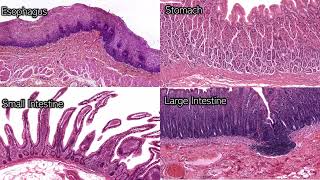
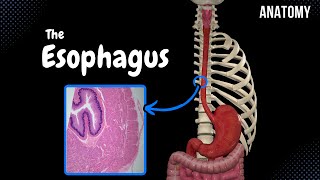

 12 video lessons
Microscopic Anatomy of the Gastrointestinal Tract and Associated Glands


 8 video lessons
Microscopic Structure and Function of the Urinary Tract
 3 video lessons
Microscopic Anatomy of the Respiratory, Reproductive, and Endocrine Systems
1 video lesson
Micromeritics and Powder Characterisation
 2 video lessons
Extraction and Separation Operations
1 video lesson
Compaction and Tablet Manufacturing
1 video lesson
Capsule Formulation and Filling


 7 video lessons
Foundations and Scope of Natural Medicines


 4 video lessons
Botanical Taxonomy and Botanical Nomenclature

 5 video lessons
Herbarium Practice and Specimen Preservation


 5 video lessons
Macroscopic Evaluation and Organoleptic Characteristics


 4 video lessons
Plant Histology and Diagnostic Microscopic Features



 8 video lessons
Quality Assessment, Adulteration, and Standardization
 3 video lessons
Mineral-Derived Medicinal Substances


 11 video lessons
Homeostasis and Fluid Compartments


 10 video lessons
Cellular Excitability and the Action Potential



 16 video lessons
Nerve Properties and Synaptic Transmission


 24 video lessons
Gastrointestinal Secretion, Motility, and Digestion


 6 video lessons
Cardiovascular Function and Hemodynamics


 11 video lessons
Renal Mechanics, Filtration, and Tubular Transport


 6 video lessons
Acid-Base, Electrolyte Homeostasis, and Renal Pathology
 10 video lessons
Reproductive Physiology and Development


 4 video lessons
Foundations and the Engineering Discipline


 7 video lessons
Life Cycles and Process Models


 5 video lessons
Requirements Engineering and Traceability


 8 video lessons
System Modeling and Architectural Design

 9 video lessons
Design Patterns and Anti-Patterns
 1 video lesson
Coding Standards, Review, and Secure Implementation



 8 video lessons
Verification, Validation, and Software Testing


 6 video lessons
Quality Models, Metrics, and Refactoring



 5 video lessons
Project Management, Estimation, and Teams


 8 video lessons
Configuration Management, CI/CD, and DevOps


 4 video lessons
Software Evolution, Technical Debt, and Legacy Systems


 5 video lessons
Ethics, Society, and Emerging Trends


 4 video lessons
Business Law I
9:47
To provide an account of the structure and function of the human body
5:11
To stimulate an interest in the study of the human body and to provide understanding and critical judgment, appropriate for promoting excellence in biomedical education
14:23
To gain knowledge of basic anatomical terminology
22:34
To identify gross anatomical structures in adult human cadaver
 5:06
To understand structural – functional relationships
 2:13
To determine a broad understanding of structural – function relationships
 14:34
To present an overview of systems and organs of the human body
 17:23
To gain knowledge of basic anatomical terminology
35:37
Explain the nature, scope and history of pharmacognosy and the role of modern pharmacognosy in drug discovery.
31:56
Apply the principles of plant taxonomy and botanical nomenclature to medicinal plants.
12:39
Describe and use the macroscopic and microscopic features of crude drugs from plant, animal and mineral sources for identification.
12:53
Prepare sections and mounts of plant material, and perform microscopic measurements of plant cells and tissues.
 30:46
Characterise organized and unorganized drugs and powders of natural origin.
5:24
Prepare herbarium specimens and explain their use.
25:43
Define pharmacognosy and related terms
13:55
Outline the history of pharmacognosy
12:11
Explain the nature of software, the causes and modes of software failure, and why software engineering is practised as a discipline.
2:20
Compare software process models and select and justify a model for a given project context.
25:45
Elicit, specify, validate and trace functional and non-functional requirements, and manage requirements change.
12:24
Apply design principles, architectural styles, UML models and design patterns to produce and evaluate a software design.
 12:28
Plan and manage a software project, including estimation, scheduling, risk management, configuration and release management, and DevOps practice.
 22:52
Explain maintenance and evolution strategies, and apply professional ethics, privacy and responsible-engineering principles to current and emerging technologies.
 14:53
Software Engineering Foundations and Process Models
 17:34
Requirements Engineering and Software Design
7:09
Describe the history and scope of pharmacology, the sources of drugs, and the nature and nomenclature of drugs.
29:31
Explain the molecular targets of drug action and the signal transduction mechanisms linked to each receptor family.
4:03
Analyse drug–receptor interactions quantitatively: concentration–response relationships, affinity and efficacy, types of antagonism, Schild analysis and radioligand binding.
24:36
Explain the mechanisms and consequences of receptor regulation, desensitisation and tolerance.
 14:25
Describe the absorption, distribution, metabolism and excretion of drugs, and apply pharmacokinetic parameters to calculate and interpret dosing regimens.
 8:05
Predict pharmacokinetic and pharmacodynamic drug interactions from their mechanisms.
 8:15
Explain transmission in the somatic, autonomic and enteric nervous systems, and predict the effects of drugs acting at cholinergic, adrenergic, ganglionic, neuromuscular and NANC sites.
 3:37
Describe the history and scope of pharmacology, the sources of drugs, and the nature and nomenclature of drugs.
27:44
Characterise pharmaceutical powders by particle size, surface area, density, porosity and flow, and relate these properties to processing and product performance.
14:14
Explain the mechanisms of compaction and compression, lubrication, size reduction and drying, and their effects on product quality.
6:18
Describe the principles of design, formulation and manufacture of granules, tablets, hard and soft capsules and powders, and solve common manufacturing problems.
37:45
Explain how drug release can be modified in a dosage form or device, and outline the principles of nanoparticle-based and other advanced drug delivery systems.
5:31
Explain the principles, methods and equipment of extraction, expression, filtration and distillation
27:44
Characterise pharmaceutical powders by particle size, surface area, density, porosity and flow
14:14
Explain the mechanisms of compaction and compression, lubrication, size reduction and drying
6:18
Describe the principles of design, formulation and manufacture of granules, tablets, hard and soft capsules and powders
18:26
5.1.1 Describe the coverings of the kidneys (fibrous capsule, perirenal fat, renal fascia, pararenal fat) and their external and internal features (hilum, cortex, medulla, pyramids, calyces, pelvis).
2:33
5.1.2 Compare the positions and relations of the left and right kidneys and explain the significance of their relation to the diaphragm in clinical examination.
2:16
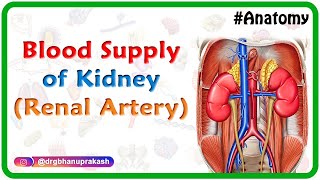
5.1.3 Describe the blood supply, venous and lymphatic drainage and innervation of the kidneys, and explain the arterial segments of the kidney.
18:55
5.1.4 Describe the course and relations of the ureters from the renal hilum to the bladder, their sites of narrowing, and the significance of their relation to the cervix and uterine artery in females.
 1:22
5.2.1 Describe the shape, parts, trigone, position and peritoneal relations of the empty and full bladder.
 12:29
5.2.3 Describe the anatomical and histological features that allow the bladder to expand as it fills.
 8:30
5.2.4 Describe the origin and course of the superior and inferior vesical arteries, the significance of the umbilical ligaments, and the venous and lymphatic drainage of the bladder and prostate.
 18:25
5.2.5 Describe the innervation of the bladder (pelvic splanchnic, sympathetic and pudendal nerves) and the parts of the male and female urethra.
Videos play from YouTube. Watching is free for everyone. YouTube Terms of Service · Google Privacy Policy