PQS-PHY-27 — Homeostasis and Fluid Compartments
-
 6:35
6.4.1 Describe the body fluid compartments, their volumes and composition, and their measurement by indicator dilution.
It directly explains the division of body fluid compartments, their volumes and ionic composition, and the principles of measuring them using dilution methods.
-
 0:45
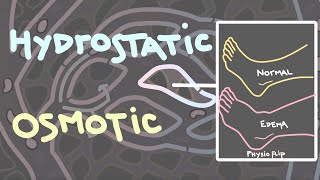
6.4.2 Explain the distribution of fluid between plasma and interstitium (Starling forces) and between extracellular and intracellular compartments (osmosis), and calculate plasma osmolality.
It explains how hydrostatic and colloid osmotic pressures balance to govern fluid filtration and reabsorption between plasma and the interstitium.
-
 11:11
6.4.3 Predict the effects of isotonic, hypotonic and hypertonic fluids on the compartments and explain the principles of fluid therapy.
It walks through how common intravenous solutions like 0.9% sodium chloride and 5% dextrose in water behave as isotonic or hypotonic fluids across body fluid compartments.
-
 4:26
6.9.1 Describe normal daily fluid and electrolyte balance (intake and losses).
It explains the fundamental principles of water balance by examining how the body manages water intake and fluid losses.
PQS-PHY-31 — Cardiovascular Function and Hemodynamics

PQS-PHY-32 — Renal Mechanics, Filtration, and Tubular Transport
-
 4:47
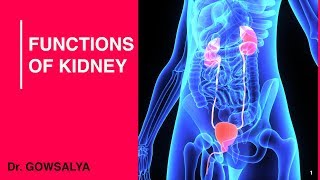
6.1.1 Explain the functions of the kidney: excretion of metabolic wastes and foreign chemicals; regulation of water and electrolyte balance, osmolarity, arterial pressure and acid–base balance; hormone secretion and metabolism; gluconeogenesis.
It systematically covers the physiological functions of the kidney, including the elimination of metabolic wastes and foreign chemicals alongside water, electrolyte, and acid–base regulation.
-
 0:39
6.1.2 Describe the functional anatomy of cortical and juxtamedullary nephrons and the magnitude of renal blood flow.
Explains the structural differences between cortical and juxtamedullary nephrons, their capillary arrangements, and the components of the juxtaglomerular apparatus.
-
 2:27
6.2.1 Explain the determinants of the glomerular filtration rate (Starling forces, filtration coefficient) and calculate net filtration pressure.
It breaks down glomerular filtration rate determinants systematically, walking through the Starling forces, calculating net filtration pressure, and explaining the filtration coefficient.
-
 10:48
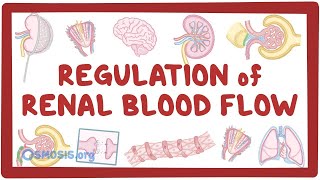
6.2.2 Describe the physiological control of GFR and renal blood flow (sympathetic nerves, angiotensin II, prostaglandins, nitric oxide).
This video walks through the extrinsic and intrinsic mechanisms controlling renal blood flow and glomerular hemodynamics, covering autonomic innervation and vasoactive mediators.
-
 25:05
6.2.3 Explain autoregulation of GFR and renal blood flow by the myogenic mechanism and tubuloglomerular feedback.
This lecture directly explains how renal blood flow and GFR are autoregulated through both the myogenic mechanism and tubuloglomerular feedback.
-
 16:30
6.2.4 Calculate GFR from inulin or creatinine clearance and calculate the filtration fraction.
It explains the renal clearance formula step by step, showing how inulin clearance yields GFR and how combining this with renal plasma flow allows you to calculate the filtration fraction.
-
 6:46
6.3.2 Explain tubular secretion and the transport maximum, using the renal threshold for glucose as an example.
Explains transport maximum, renal threshold, and splay using glucose, while also introducing tubular secretion mechanisms in the tubule.
-
 13:49
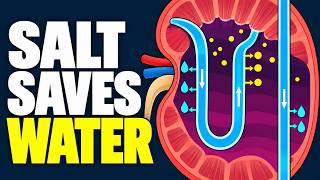
6.3.3 Explain the requirements for excreting a concentrated urine: countercurrent multiplication, urea recycling, the vasa recta and ADH.
It systematically covers every requirement for concentrating urine, illustrating step-by-step countercurrent multiplication, the action of ADH on aquaporins, urea recycling, and countercurrent exchange by the vasa recta.
-
 18:04
6.3.4 Relate the renal transporters to the sites of action of loop and thiazide diuretics and SGLT2 inhibitors.
It walks through the segments of the nephron and illustrates how loop and thiazide diuretics target specific apical transporters to inhibit solute reabsorption.
-
 5:35
6.7.2 Explain the hormonal regulation of urine formation and composition: ADH (pituitary and diuresis), aldosterone, ANP and PTH.
It directly outlines the specific tubular sites and physiological actions of aldosterone, antidiuretic hormone, atrial natriuretic peptide, and parathyroid hormone in regulating urine volume and electrolyte composition.
-
 6:04
6.7.3 Describe the kidney hormones (erythropoietin, renin, calcitriol) and their actions.
It explains the physiological trigger for erythropoietin release and its mechanism in stimulating red blood cell production in the bone marrow.
PQS-PHY-33 — Acid-Base, Electrolyte Homeostasis, and Renal Pathology
-
 8:34
6.6.1 Explain long-term control of arterial pressure by the kidneys (pressure natriuresis and the renal function curve).
Explains the foundational renal-body fluid feedback mechanism responsible for long-term arterial pressure regulation and volume control.
-
 5:59
6.7.1 Describe the normal composition of urine (urea, creatinine, uric acid, electrolytes) and its abnormal constituents (glucose, protein, ketones, blood, bilirubin).
It outlines the normal composition and physical properties of urine, specifically covering nitrogenous wastes such as urea, uric acid, creatinine, and electrolytes.
-
 9:09
6.8.1 Explain the renal regulation of acid–base balance: bicarbonate reabsorption, generation of new bicarbonate, and excretion of titratable acid and ammonium.
It systematically covers each component of the objective in separate sections, explaining proximal bicarbonate reclamation along with phosphate and ammonia buffering for net acid excretion.
-
 30:15
6.8.2 Explain the influence of fatty acid and amino acid metabolism on acid–base balance (ketoacids, sulphuric acid from sulphur-containing amino acids, renal ammoniagenesis from glutamine).
This video clearly explains how fatty acid oxidation generates ketoacids and how the catabolism of methionine and cysteine produces fixed sulphuric acid.
-
 3:57
6.8.3 Describe the renal handling of sodium, potassium, calcium, phosphate and magnesium, and the role of the kidney in calcium homeostasis (1-alpha-hydroxylase, PTH, FGF23).
It explains the endocrine control of systemic calcium homeostasis, detailing the actions of parathyroid hormone and the activation of vitamin D.
-
 20:16
6.8.4 Interpret basic acid–base and electrolyte results, including calculation of the anion gap.
It systematically walks through interpreting blood gas and electrolyte results step by step, including calculating the serum anion gap, adjusting for albumin, applying Winter's formula, and assessing respiratory compensation.
Videos play from YouTube. Watching is free for everyone. YouTube Terms of Service · Google Privacy Policy