


-
12:11
Watched
Explain the nature of software, the causes and modes of software failure, and why software engineering is practised as a discipline.
-
2:20
Watched
Compare software process models and select and justify a model for a given project context.
-
25:45
Watched
Elicit, specify, validate and trace functional and non-functional requirements, and manage requirements change.
-
12:24
Watched
Apply design principles, architectural styles, UML models and design patterns to produce and evaluate a software design.
-
 12:28
Watched
Plan and manage a software project, including estimation, scheduling, risk management, configuration and release management, and DevOps practice.
-
 22:52
Watched
Explain maintenance and evolution strategies, and apply professional ethics, privacy and responsible-engineering principles to current and emerging technologies.
Software Engineering
-
 14:53
Watched
Software Engineering Foundations and Process Models
-
 17:34
Watched
Requirements Engineering and Software Design
-
 5:48
Watched
Project Management, Configuration Management and DevOps
The nature of software and why it is hard to engineer
-
 3:48
Watched
Classify software by type (generic and customised products; system, application, embedded, web and mobile, AI-enabled and safety-critical software) and give an example of each.
-
 0:42
Watched
Describe the essential attributes of good software: maintainability, dependability and security, efficiency, and acceptability.
Software failure, unreliability and the discipline
-
 7:13
Watched
Distinguish an error (human mistake), a fault (defect in the code or design) and a failure (observed deviation from required behaviour), and trace how one leads to the next.
-
 11:14
Watched
Explain why software engineering emerged as a discipline, with reference to the "software crisis" and the 1968 NATO Software Engineering Conference.
The SDLC and plan-driven models
-
 2:56
Watched
Define the software development life cycle (SDLC) and describe the purpose, inputs and outputs of each generic phase: feasibility, requirements, design, implementation, testing, deployment and maintenance.
-
 9:12
Watched
Describe the Waterfall model and identify the project conditions under which it is appropriate.
-
 10:26
Watched
Describe Boehm's Spiral model and explain the role of risk analysis in each cycle.
Agile development and choosing a process model
-
 8:23
Watched
Explain the four values and the principles of the Agile Manifesto.
-
 8:00
Watched
Describe the Scrum framework: its roles (Product Owner, Scrum Master, Developers), events (Sprint, Sprint Planning, Daily Scrum, Sprint Review, Sprint Retrospective) and artefacts (Product Backlog, Sprint Backlog, Increment).
-
 15:14
Watched
Compare the Waterfall, V-Model, Iterative, Spiral and Agile models on requirements stability, risk handling, customer involvement, documentation, and suitability for safety-critical or regulated systems.
-
 23:10
Watched
Select and justify a process model for a given project scenario, considering size, criticality, requirements volatility, regulatory constraints and team distribution.
Requirements types and elicitation
-
 5:43
Watched
Distinguish user requirements from system requirements, and functional from non functional requirements; classify non-functional requirements as product, organisational or external.
-
 10:04
Watched
Describe elicitation methods (interviews, questionnaires, observation and ethnography, workshops and JAD sessions, prototyping, document analysis) and select suitable methods for a given stakeholder situation.
Specification, validation, traceability and change
-
 10:56
Watched
Describe the purpose, structure and content of a Software Requirements Specification (SRS), with reference to ISO/IEC/IEEE 29148.
-
 38:00
Watched
Describe requirements validation checks (validity, consistency, completeness, realism, verifiability) and techniques (reviews, prototyping, test-case generation).
-
 1:48
Watched
Construct and interpret a requirements traceability matrix, and describe a requirements change management process (change request, impact analysis, approval, baseline update).
Design principles and architectural styles
-
 22:19
Watched
Explain abstraction, modularity, information hiding and separation of concerns as design principles.
-
 7:41
Watched
Describe the layered, client–server, microservices and event-driven architectural styles, including their components, connectors and typical uses.
-
7:41
Watched
Compare architectural styles against quality attributes (performance, scalability, availability, maintainability, security) and select a style for a given scenario.
-
 23:42
Watched
Analyse the microservices case study to explain the trade-off between independent
UML structural and behavioural modelling
-
 7:40
Watched
Distinguish UML structural diagrams from behavioural diagrams and state the purpose of each main diagram type.
-
12:24
Watched
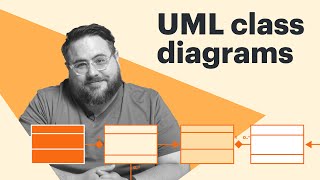
Draw and interpret a class diagram showing associations, multiplicity, aggregation, composition, generalisation and dependency.
-
 7:49
Watched
Draw and interpret use case, sequence, activity and state machine diagrams for a given scenario.
-
 3:07
Watched
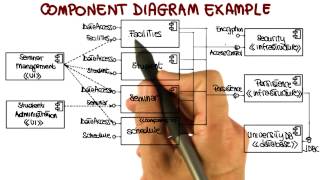
Describe component and deployment diagrams and relate them to an architectural style.
Design patterns: purpose, categories and creational patterns
-
 13:58
Watched
Explain what a design pattern is, the elements of a pattern description (name, problem, solution, consequences), and the benefits and risks of using patterns.
-
 7:22
Watched
Classify design patterns into the creational, structural and behavioural categories and state the intent of each category.
-
 8:28
Watched
Describe the intent, structure and consequences of the Singleton pattern, including thread-safety concerns and why overuse makes it an anti-pattern.
-
 13:12
Watched
Describe the Factory Method pattern, distinguish it from a simple factory and from Abstract Factory, and identify where it reduces coupling.
-
 0:53
Watched
Describe the intent, structure and an example use of at least one structural pattern (Adapter, Facade or Decorator).
Behavioural patterns, MVC and anti-patterns
-
1:11
Watched
Describe the Observer pattern (subject, observers, notification, push and pull models) and identify it in code or in a class diagram.
-
 7:31
Watched
Explain Model–View–Controller (MVC), the responsibilities of each component, and why MVC is classed as an architectural or compound pattern rather than a single design pattern.
-
7:41
Watched
Select an appropriate pattern for a given design problem and justify the choice.
-
 1:06
Watched
Analyse the use of the Observer pattern in distributed systems (publish–subscribe, message brokers) and explain the issues of message ordering, delivery guarantees and coupling.
Coding standards, secure coding and code review
Version control, build automation and CI/CD pipelines
-
 19:42
Watched
Explain the purpose of version control and use core Git concepts: repository, commit, branch, merge, rebase, pull request and tag.
-
 31:32
Watched
Compare branching strategies (Git Flow, GitHub Flow, trunk-based development) and select one for a given team context.
-
 7:53
Watched
Describe build automation tools (for example Make, Maven or Gradle, npm) and the stages of a CI/CD pipeline: build, test, analyse, package and deploy.
Test levels and test-case design
-
 6:46
Watched
Define software testing, distinguish verification (“are we building the product right?”) from validation (“are we building the right product?”), and explain why testing can show the presence but not the absence of defects.
-
 3:05
Watched
Describe unit, integration (top-down, bottom-up and big-bang, with stubs and drivers), system and acceptance testing (alpha, beta, user acceptance), and regression testing.
-
 3:02
Watched
Derive black-box test cases using equivalence partitioning, boundary value analysis and decision tables.
-
 25:56
Watched
Derive white-box test cases for statement and branch coverage, calculate cyclomatic complexity from a control-flow graph, and interpret coverage results.
Test automation, defect tracking and V&V strategy
-
 15:22
Watched
Describe test automation, test frameworks (the xUnit family such as JUnit or pytest; UI automation tools such as Selenium) and the test automation pyramid.
-
 7:59
Watched
Explain test-driven development (red–green–refactor) and its relationship to automated regression testing.
-
 7:46
Watched
Describe the defect life cycle and the contents of a defect report, and distinguish defect severity from priority.
-
 5:40
Watched
Describe verification and validation strategies, static (reviews, inspections, static analysis, formal verification) and dynamic (testing), and plan a V&V approach for a safety-critical system.
Software quality and the ISO/IEC 25010 model
-
 3:25
Watched
Define software quality from the user, product and process perspectives, and distinguish quality assurance from quality control.
-
 15:09
Watched
Describe the ISO/IEC 25010 product quality model (its characteristics and sub characteristics) and the quality-in-use model, stating which edition of the standard is being used.
-
 3:47
Watched
Describe software reviews and audits (management review, technical review, inspection, audit) and their purposes within quality assurance.
Quality metrics and code refactoring
-
 5:23
Watched
Distinguish product, process and project metrics, and explain the Goal–Question–Metric (GQM) approach to choosing metrics.
-
 13:43
Watched
Calculate and interpret reliability metrics: MTTF, MTTR, MTBF, availability [MTTF ÷ (MTTF + MTTR)], defect density, POFOD and ROCOF.
-
 19:29
Watched
Define refactoring, identify common code smells (long method, large class, duplicated code, feature envy) and select behaviour-preserving refactorings (extract method, rename, move method).
Planning, estimation and scheduling
-
 11:10
Watched
Describe project planning activities and the contents of a project plan, and contrast plan-driven planning with agile release and sprint planning (velocity, story points).
-
 13:38
Watched
Construct a work breakdown structure (WBS) for a given project.
-
 6:57
Watched
Construct a schedule using a Gantt chart and an activity network, identify the critical path, and allocate resources to activities.
Risk management, teams and project outcomes
-
 13:24
Watched
Describe the risk management process: identification, analysis (probability and impact), planning (avoidance, mitigation, transfer, acceptance) and monitoring.
-
 15:46
Watched
Calculate risk exposure (probability × impact) and prioritise risks in a risk register.
Configuration management and release management

Share this course
Send it to your class on WhatsApp.
WhatsAppVideos play from YouTube. Watching is free for everyone. YouTube Terms of Service · Google Privacy Policy