

Physiology
3.1 Mouth: mastication, oral absorption and salivary secretion (Physiology)
-
11:05
Watched
3.1.1 State the primary functions of the GIT and describe its functional organisation: enteric nervous system, extrinsic innervation and the main gastrointestinal hormones.
-
10:33
Watched
3.1.2 Describe the mechanism and value of mastication.
-
24:23
Watched
3.1.3 Explain the mechanism, advantages and clinical applications of oral (sublingual and buccal) absorption, including avoidance of first-pass metabolism.
-
14:40
Watched
3.1.4 Describe the composition, two-stage secretion (isotonic acinar fluid modified by the ducts), functions and control of saliva.
3.2 Swallowing and vomiting (Physiology)
-
 2:59
Watched
3.2.1 Describe the oral, pharyngeal and oesophageal stages of swallowing and the swallowing reflex.
-
 23:11
Watched
3.2.2 Explain the functions of the upper and lower oesophageal sphincters and the factors that affect them.
-
 7:43
Watched
3.2.3 Describe the causes and basic mechanism of vomiting (vomiting centre, chemoreceptor trigger zone) and its metabolic consequences.
3.3 Gastric secretion and motility (Physiology)
-
 5:19
Watched
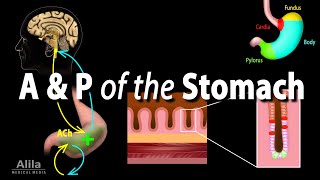
3.3.1 List the major functions of the stomach and describe the composition and functions of gastric secretions (acid, pepsinogen, intrinsic factor, mucus, gastrin).
-
 13:22
Watched
3.3.2 Describe the mechanism of acid secretion by the parietal cell (H⁺/K⁺-ATPase, carbonic anhydrase, alkaline tide).
-
 5:09
Watched
3.3.3 Explain the control of gastric secretion in the cephalic, gastric and intestinal phases (acetylcholine, gastrin, histamine, somatostatin, secretin).
3.4 Small intestinal secretions (Physiology)
-
 4:08
Watched
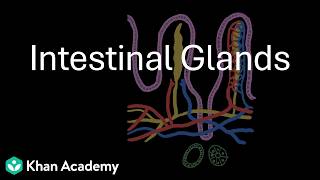
3.4.2 Describe the secretion of the intestinal crypts, the brush-border enzymes, and their functions and control.
-
 7:46
Watched
3.4.3 Explain intestinal chloride secretion through CFTR and its role in secretory diarrhoea (for example cholera toxin).
3.5 Small intestinal motility (Physiology)
-
 16:20
Watched
3.5.1 Describe mixing (segmentation), peristaltic and villous movements and the role of slow waves and the interstitial cells of Cajal.
-
 11:19
Watched
3.5.2 Describe the migrating motor complex.
-
 4:17
Watched
3.5.3 Describe the ileocaecal junction and its control.
3.6 Pancreatic secretion (Physiology)
-
 27:09
Watched
3.6.1 Describe the composition of pancreatic juice: enzymes (trypsinogen, chymotrypsinogen, amylase, lipase, colipase) and the alkaline bicarbonate-rich fluid.
-
 18:07
Watched
3.6.3 Explain the control of pancreatic secretion by the vagus, secretin and cholecystokinin.
3.7 Liver functions, bile and jaundice (Physiology)
-
 26:38
Watched
3.7.1 List the major functions of the liver.
-
 39:26
Watched
3.7.2 Describe the composition, secretion, functions and control of bile.
-
 13:20
Watched
3.7.3 Explain the enterohepatic circulation of bile acids and its significance.
-
 8:03
Watched
3.7.5 Explain bilirubin metabolism and classify jaundice as pre-hepatic, hepatic or post-hepatic, with the characteristic findings in blood, urine and stool.
3.8 Terminal digestion and absorption; large intestine (Physiology)
-
 10:09
Watched
3.8.1 Describe membrane digestion of carbohydrates and sodium-dependent (SGLT1) and sodium-independent (GLUT5, GLUT2) sugar transport, and relate them to oral rehydration solution.
-
 23:48
Watched
3.8.4 Describe water and electrolyte absorption along the intestine.
-
 30:23
Watched
3.8.5 Describe colonic motility (haustral contractions, mass movements), absorption and secretion, colonic flora and the defecation reflex.
Share this course
Send it to your class on WhatsApp.
WhatsAppVideos play from YouTube. Watching is free for everyone. YouTube Terms of Service · Google Privacy Policy