


Histology)
2.10 Development of the hindgut (Developmental Anatomy)
2.11 Development of the liver, gallbladder and pancreas (Developmental Anatomy)
-
8:50
Watched
2.11.1 Describe the development of the liver from the hepatic diverticulum and septum transversum, and of the gallbladder and bile ducts.
-
11:35
Watched
2.11.2 Describe the development of the pancreas from dorsal and ventral buds, their rotation and fusion, and the formation of the main and accessory pancreatic ducts.
2.12 Congenital anomalies of the gastrointestinal tract (Developmental Anatomy)
-
10:01
Watched
2.12.1 Explain the embryological basis and presentation of oesophageal atresia with tracheo-oesophageal fistula and congenital hiatal hernia.
-
 3:35
Watched
2.12.2 Explain infantile hypertrophic pyloric stenosis, gut atresias and stenoses (failed recanalisation or vascular accident) and annular pancreas.
2.8 Development of the foregut: oesophagus, stomach and duodenum (Developmental
-
 26:20
Watched
2.8.1 Describe the formation of the primitive gut by embryonic folding and its division into foregut, midgut and hindgut, each with its own artery.
-
10:01
Watched
2.8.2 Describe the development of the oesophagus (tracheo-oesophageal septum) and of the stomach (rotation, formation of the curvatures and lesser sac).
2.9 Development of the midgut (Developmental Anatomy)
-
 26:39
Watched
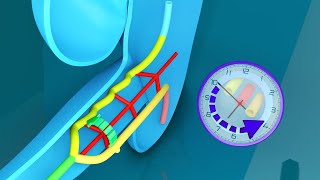
2.9.1 Describe the primary intestinal loop, physiological umbilical herniation, 270° anticlockwise rotation around the superior mesenteric artery and retraction of the loop.
-
 26:42
Watched
2.9.2 Explain the fixation of the mesenteries and the origin of the secondarily retroperitoneal parts of the gut.
-
 6:28
Watched
2.9.3 Explain the basis of malrotation and midgut volvulus.
Share this course
Send it to your class on WhatsApp.
WhatsAppVideos play from YouTube. Watching is free for everyone. YouTube Terms of Service · Google Privacy Policy