MED 203 — Molecular and Cellular Basis of Health and Disease I
-
 2:10
1.1.1 Distinguish prokaryotic and eukaryotic cells and viruses by structure, genome organisation and replication.
This gives a clear comparison of prokaryotic and eukaryotic cell structure, especially the presence or absence of a nucleus and membrane-bound organelles.
-
 19:10
1.1.2 Describe the ultrastructure of the eukaryotic cell and the functions of its organelles: nucleus, ribosomes, rough and smooth endoplasmic reticulum, Golgi apparatus, lysosomes, peroxisomes, mitochondria and cytoskeleton.
This is the strongest broad overview because it explicitly connects protein synthesis to the nucleus, nucleolus, ribosomes, ER and Golgi, and also covers mitochondria, lysosomes, peroxisomes and all three cytoskeletal components.
-
 37:17
1.1.3 State the chemical constituents of the cell (water, ions, carbohydrates, lipids, proteins, nucleic acids) and their relative proportions.
This lesson explains water, electrolytes (ions), and the four classes of macromolecules, covering the full spectrum of chemical constituents found in cells.
-
 33:08
1.1.4 Relate organelle dysfunction to disease, for example lysosomal storage disorders and mitochondrial disorders.
It explains lysosome biology and the pathophysiology of key lysosomal storage diseases resulting from acid hydrolase deficiencies, including Tay-Sachs, Gaucher, and Niemann-Pick diseases.
-
 8:31
1.2.1 Explain enthalpy, entropy and the first and second laws of thermodynamics as they apply to living systems.
It explains entropy and the second law of thermodynamics within a biological framework, illustrating how living organisms function under the universal tendency toward disorder.
-
 24:18
1.2.2 Define Gibbs free energy, calculate ΔG and ΔG°′ and predict whether a reaction is spontaneous, including the effect of coupling reactions.
This most directly teaches calculation of actual ΔG from ΔG° and Q, the ΔG°–K relationship, and how Q relative to K predicts spontaneity.
-
 6:19
1.2.3 Explain why ATP serves as the energy currency of the cell and describe other high-energy compounds (phosphoenolpyruvate, creatine phosphate, 1,3-bisphosphoglycerate, thioesters).
It directly focuses on the structure of ATP and explains the properties that make it the cell's universal energy currency.
-
 22:01
1.3.1 Classify monosaccharides (aldoses and ketoses; trioses to hexoses) and describe their stereoisomerism, ring structures and anomers.
It explains D- and L-stereoisomerism, epimers, how open-chain Fischer projections cyclize into Haworth projections and chair conformations, and how to identify alpha and beta anomers.
-
 8:01
1.3.2 Describe the reactions of monosaccharides (oxidation and reducing properties, reduction to sugar alcohols, glycoside formation) and their clinical importance.
It systematically covers the key chemical reactions of monosaccharides for medical biochemistry, including oxidation to sugar acids, reduction to sugar alcohols, Benedict's test, and glycoside formation.
-
 10:20
1.3.3 Describe the structure and clinical importance of disaccharides (sucrose, lactose, maltose) and polysaccharides (starch, glycogen, cellulose, glycosaminoglycans).
It explains the chemical structures, constituent monosaccharides, and specific glycosidic linkages of maltose, lactose, and sucrose.
-
 8:10
1.4.1 Classify fatty acids (saturated, unsaturated, essential, cis and trans) and describe the structure of glycerol and triacylglycerols.
It walks through the molecular structure of triacylglycerols from glycerol and fatty acids, contrasting the structural conformations and properties of saturated, cis-unsaturated, and trans-unsaturated fatty acids.
-
 18:57
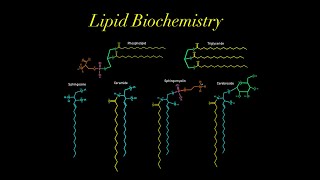
1.4.2 Describe the structure, classification and functions of phospholipids and sphingolipids, and the reactions of lipids (hydrolysis, saponification, peroxidation).
It walks through the chemical structures of glycerophospholipids alongside sphingosine and ceramide-based sphingolipids.
-
 6:15
1.4.3 Describe the clinical importance of lipids, including sphingolipidoses, trans fats and lipid peroxidation.
It explains the structure of trans fatty acids and why dietary trans fats are harmful to cardiovascular health.
-
 9:28
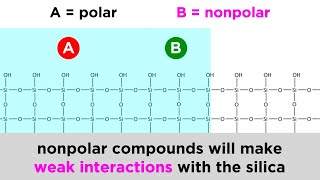
1.4.4 Explain the principles of separating lipids, including thin-layer chromatography.
It explains the fundamental principles of thin-layer chromatography, including how relative polarity determines partitioning between the stationary and mobile phases and how retention factors are calculated.
-
 6:55
1.5.1 Classify amino acids by side-chain properties and explain their acid–base behaviour (pKa, isoelectric point).
It clearly groups the standard amino acids by their specific side-chain chemical properties, including branched-chain, aromatic, hydroxyl-, and sulfur-containing groups.
-
 8:49
1.5.2 Describe the primary, secondary, tertiary and quaternary structure of proteins and the bonds that stabilise each level.
It walks through primary, secondary, tertiary, and quaternary protein structures, explicitly detailing the chemical bonds and interactions that stabilise each hierarchical level.
-
 7:46
1.5.3 Classify proteins by shape and function and describe their reactions, including denaturation.
Explains how changes in environmental factors lead to protein denaturation, while highlighting the general relationship between protein shape and function.
-
 15:12
1.5.4 Explain the consequences of altered protein structure for health, for example sickle cell haemoglobin, collagen disorders and protein misfolding diseases.
This video details the biochemical mechanism by which the Glu6Val mutation in the beta-globin chain alters the protein surface in the deoxygenated state, driving HbS polymerisation and cell sickling.
-
 7:04
1.6.1 Describe the general properties of enzymes and their classification into the six classes.
Explains and distinguishes the six major classes of enzymes based on the specific chemical reactions they catalyze.
-
 16:33
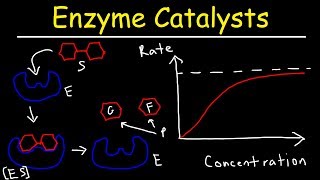
1.6.2 Explain how enzymes lower activation energy, and the roles of the active site and of cofactors.
It explains how enzymes lower the activation energy of the transition state and describes substrate binding at the active site using both the lock-and-key and induced-fit models.
-
 22:15
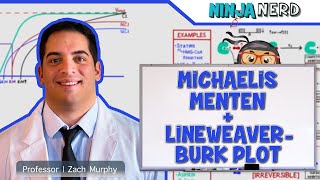
1.6.3 Explain Michaelis–Menten kinetics, and determine Km and Vmax from a Lineweaver–Burk plot.
It clearly explains the principles of Michaelis–Menten kinetics and demonstrates how to construct a Lineweaver–Burk double-reciprocal plot to determine Vmax and Km from the axes intercepts.
-
 7:44
1.6.4 Describe the factors that affect enzyme activity (substrate concentration, temperature, pH).
It systematically explains the effects of temperature, pH, and substrate concentration on reaction rates, including the temperature coefficient (Q10) and saturation kinetics.
-
 32:35
1.7.1 Distinguish competitive, non-competitive and uncompetitive inhibition and identify each from kinetic plots.
Explains how competitive, noncompetitive, and uncompetitive inhibitors bind and demonstrates their distinct signatures on both Michaelis-Menten and Lineweaver-Burk plots.
-
32:35
1.7.2 Explain irreversible inhibition with clinical examples (for example organophosphates and aspirin).
It explains the mechanism and kinetic characteristics of irreversible inhibition alongside its clinical relevance in pharmacology and toxicology.
-
 28:40
1.7.3 Describe the regulation of enzyme activity: allosteric regulation, covalent modification, zymogen activation and control of enzyme synthesis.
It provides a comprehensive medical biochemistry overview of enzyme regulation, explaining allosteric control, covalent modification, proteolytic cleavage of zymogens, and alterations in enzyme concentration.
-
 13:05
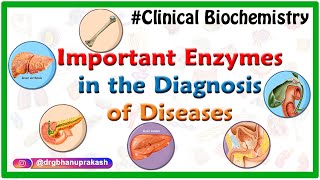
1.7.4 Describe the clinical use of enzymes as diagnostic markers and drug targets.
It explains the clinical utility of key intracellular enzymes, such as creatine kinase, lactate dehydrogenase, aminotransferases, and alkaline phosphatase, as diagnostic markers across various diseases.
-
 35:03
1.8.1 Define vitamins, coenzymes and cofactors and classify vitamins as water-soluble or fat-soluble, with their main sources.
It introduces the biochemistry of vitamins, defining them and outlining their classification into fat-soluble and water-soluble groups.
-
 29:19
1.8.2 Describe the coenzyme forms and functions of the B vitamins (thiamine, riboflavin, niacin, pantothenic acid, pyridoxine, biotin, folate, cobalamin) and vitamin C in metabolism and biological oxidation.
It systematically walks through how each B vitamin functions as a coenzyme across carbohydrate, lipid, and amino acid metabolic pathways.
-
 13:37
1.8.3 Describe the functions of vitamins A, D, E and K.
It clearly explains the physiological and biochemical roles of vitamins A, E, and K, including their mechanisms in vision, free radical scavenging, and clotting factor activation.
-
 8:23
1.8.4 Describe the consequences of deficiency (for example beriberi, pellagra, scurvy, rickets, megaloblastic anaemia) and of toxicity (vitamins A and D).
It explains the pathophysiology and clinical signs of scurvy resulting from vitamin C deficiency and impaired collagen synthesis.
-
 39:16
1.9.1 Describe the composition of the cell membrane (phospholipids, cholesterol, proteins, carbohydrates) and the fluid mosaic model.
It provides a comprehensive lecture detailing membrane lipids (phospholipids and cholesterol), integral and peripheral proteins, and the carbohydrate glycocalyx within the fluid mosaic model.
-
 13:42
1.9.2 Relate membrane composition to membrane fluidity and function.
It explains the biochemical mechanisms by which fatty acid chain length, saturation, and cholesterol dictate membrane fluidity.
-
 10:50
1.9.3 Explain transport across membranes: simple diffusion, osmosis, facilitated diffusion, primary active transport (Na⁺/K⁺-ATPase), secondary active transport, endocytosis and exocytosis.
It systematically covers every transport mechanism named in the objective, walking through simple diffusion, facilitated diffusion, osmosis, primary and secondary active transport, and vesicular transport.
-
 5:04
1.9.4 Relate defects of membrane transport to disease, for example cystic fibrosis (CFTR) and cystinuria.
Explains how CFTR mutations impair epithelial chloride and water transport, directly linking the transport defect to clinical manifestations like viscous mucus and elevated sweat chloride.
-
 38:06
2.1.1 Outline the digestion and absorption of carbohydrates.
It thoroughly explains the enzymatic breakdown of polysaccharides and disaccharides along the GI tract as well as the transport mechanisms (SGLT1, GLUT5, and GLUT2) for enterocyte absorption.
-
 34:33
2.1.2 Describe the reactions of glycolysis, its energy yield under aerobic and anaerobic conditions, and the fate of pyruvate (pyruvate dehydrogenase, lactate).
This video walks step-by-step through all ten enzymatic reactions of glycolysis, clearly breaking down the energy investment and payoff phases and the anaerobic reduction of pyruvate to lactate.
Videos play from YouTube. Watching is free for everyone. YouTube Terms of Service · Google Privacy Policy