


-
14:23
Watched
MLO1 Use anatomical and medical terminology, describe the methods used to gather information about the body, and relate structure to function and to clinical practice.
-
11:56
Watched
MLO2 Describe the structure of prokaryotic and eukaryotic cells and viruses, the organelles and their functions, and the cell membrane and its transport mechanisms.
-
17:04
Watched
MLO3 Describe the structure, reactions and functions of carbohydrates, lipids, proteins, enzymes and vitamins, and apply biochemical thermodynamics and enzyme kinetics.
-
11:09
Watched
MLO4 Explain the energy-generating pathways, their regulation and integration, and the clinical consequences of their disorders.
-
 12:40
Watched
MLO5 Describe cell division, cell growth and the basic concepts of medical genetics, and explain their consequences for health and disease.
-
 37:13
Watched
MLO6 Describe the light and electron microscopic organisation of the basic tissues, including nervous tissue and nerve regeneration, and relate structure to function.
-
 21:59
Watched
MLO7 Explain homeostasis, the composition of body fluids, membrane potentials, the generation, propagation and recording of action potentials, synaptic transmission and cell signalling.
-
 8:20
Watched
MLO8 Describe the functional and applied anatomy of the upper limb and predict the effects of nerve injuries.
Biochemistry
1.1 Cell structure and organelles (Biochemistry)
-
 2:10
Watched
1.1.1 Distinguish prokaryotic and eukaryotic cells and viruses by structure, genome organisation and replication.
-
 19:10
Watched
1.1.2 Describe the ultrastructure of the eukaryotic cell and the functions of its organelles: nucleus, ribosomes, rough and smooth endoplasmic reticulum, Golgi apparatus, lysosomes, peroxisomes, mitochondria and cytoskeleton.
-
 37:17
Watched
1.1.3 State the chemical constituents of the cell (water, ions, carbohydrates, lipids, proteins, nucleic acids) and their relative proportions.
-
 33:08
Watched
1.1.4 Relate organelle dysfunction to disease, for example lysosomal storage disorders and mitochondrial disorders.
1.2 Biochemical thermodynamics and high-energy compounds (Biochemistry)
-
 8:31
Watched
1.2.1 Explain enthalpy, entropy and the first and second laws of thermodynamics as they apply to living systems.
-
 24:18
Watched
1.2.2 Define Gibbs free energy, calculate ΔG and ΔG°′ and predict whether a reaction is spontaneous, including the effect of coupling reactions.
-
 6:19
Watched
1.2.3 Explain why ATP serves as the energy currency of the cell and describe other high-energy compounds (phosphoenolpyruvate, creatine phosphate, 1,3-bisphosphoglycerate, thioesters).
1.3 Carbohydrate structure and function (Biochemistry)
-
 22:01
Watched
1.3.1 Classify monosaccharides (aldoses and ketoses; trioses to hexoses) and describe their stereoisomerism, ring structures and anomers.
-
 8:01
Watched
1.3.2 Describe the reactions of monosaccharides (oxidation and reducing properties, reduction to sugar alcohols, glycoside formation) and their clinical importance.
-
 10:20
Watched
1.3.3 Describe the structure and clinical importance of disaccharides (sucrose, lactose, maltose) and polysaccharides (starch, glycogen, cellulose, glycosaminoglycans).
1.4 Lipid structure and function (Biochemistry)
-
 8:10
Watched
1.4.1 Classify fatty acids (saturated, unsaturated, essential, cis and trans) and describe the structure of glycerol and triacylglycerols.
-
 18:57
Watched
1.4.2 Describe the structure, classification and functions of phospholipids and sphingolipids, and the reactions of lipids (hydrolysis, saponification, peroxidation).
-
 6:15
Watched
1.4.3 Describe the clinical importance of lipids, including sphingolipidoses, trans fats and lipid peroxidation.
-
 9:28
Watched
1.4.4 Explain the principles of separating lipids, including thin-layer chromatography.
1.5 Amino acids and protein structure and function (Biochemistry)
-
 6:55
Watched
1.5.1 Classify amino acids by side-chain properties and explain their acid–base behaviour (pKa, isoelectric point).
-
 8:49
Watched
1.5.2 Describe the primary, secondary, tertiary and quaternary structure of proteins and the bonds that stabilise each level.
-
 7:46
Watched
1.5.3 Classify proteins by shape and function and describe their reactions, including denaturation.
-
 15:12
Watched
1.5.4 Explain the consequences of altered protein structure for health, for example sickle cell haemoglobin, collagen disorders and protein misfolding diseases.
1.6 Enzyme catalysis: properties, classification and kinetics (Biochemistry)
-
 7:04
Watched
1.6.1 Describe the general properties of enzymes and their classification into the six classes.
-
 16:33
Watched
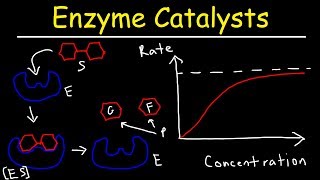
1.6.2 Explain how enzymes lower activation energy, and the roles of the active site and of cofactors.
-
 22:15
Watched
1.6.3 Explain Michaelis–Menten kinetics, and determine Km and Vmax from a Lineweaver–Burk plot.
-
 7:44
Watched
1.6.4 Describe the factors that affect enzyme activity (substrate concentration, temperature, pH).
1.7 Enzyme activity, regulation and inhibition (Biochemistry)
-
 32:35
Watched
1.7.1 Distinguish competitive, non-competitive and uncompetitive inhibition and identify each from kinetic plots.
-
32:35
Watched
1.7.2 Explain irreversible inhibition with clinical examples (for example organophosphates and aspirin).
-
 28:40
Watched
1.7.3 Describe the regulation of enzyme activity: allosteric regulation, covalent modification, zymogen activation and control of enzyme synthesis.
-
 13:05
Watched
1.7.4 Describe the clinical use of enzymes as diagnostic markers and drug targets.
1.8 Vitamins, coenzymes and cofactors (Biochemistry)
-
 35:03
Watched
1.8.1 Define vitamins, coenzymes and cofactors and classify vitamins as water-soluble or fat-soluble, with their main sources.
-
 29:19
Watched
1.8.2 Describe the coenzyme forms and functions of the B vitamins (thiamine, riboflavin, niacin, pantothenic acid, pyridoxine, biotin, folate, cobalamin) and vitamin C in metabolism and biological oxidation.
-
 13:37
Watched
1.8.3 Describe the functions of vitamins A, D, E and K.
-
 8:23
Watched
1.8.4 Describe the consequences of deficiency (for example beriberi, pellagra, scurvy, rickets, megaloblastic anaemia) and of toxicity (vitamins A and D).
1.9 Membrane structure and transport (Biochemistry)
-
 39:16
Watched
1.9.1 Describe the composition of the cell membrane (phospholipids, cholesterol, proteins, carbohydrates) and the fluid mosaic model.
-
 13:42
Watched
1.9.2 Relate membrane composition to membrane fluidity and function.
-
 10:50
Watched
1.9.3 Explain transport across membranes: simple diffusion, osmosis, facilitated diffusion, primary active transport (Na⁺/K⁺-ATPase), secondary active transport, endocytosis and exocytosis.
-
 5:04
Watched
1.9.4 Relate defects of membrane transport to disease, for example cystic fibrosis (CFTR) and cystinuria.
2.1 Carbohydrate metabolism I: digestion, glycolysis and its regulation (Biochemistry)

Share this course
Send it to your class on WhatsApp.
WhatsAppVideos play from YouTube. Watching is free for everyone. YouTube Terms of Service · Google Privacy Policy