

Pharmacology
Adrenergic transmission and drugs
-
10:20
Watched
Classify adrenoceptors (α₁, α₂, β₁, β₂, β₃) by location, G-protein coupling, second messenger and response.
-
11:53
Watched
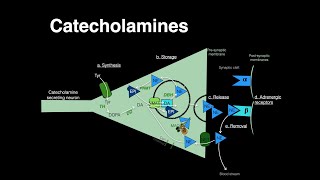
Describe noradrenaline synthesis (tyrosine hydroxylase as the rate-limiting step), vesicular storage (VMAT), release and inactivation (uptake 1/NET, uptake 2, MAO, COMT).
-
0:44
Watched
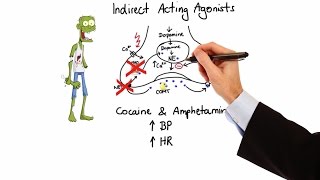
Explain false transmitters (methyldopa → α-methylnoradrenaline) and indirectly acting sympathomimetic amines (tyramine, amphetamine, ephedrine), including the tyramine–MAOI interaction.
-
17:51
Watched
Identify pre- and post-junctional sites for drug action: α-methyltyrosine, reserpine, neuron-blocking drugs (guanethidine), α₂-autoreceptors, uptake inhibitors (cocaine, tricyclic antidepressants), and MAO and COMT inhibitors.
-
1:58
Watched
Relate receptor selectivity to representative agonists (adrenaline, noradrenaline, isoprenaline, phenylephrine, clonidine, dobutamine, salbutamol) and antagonists (prazosin, phentolamine, propranolol, atenolol, labetalol) at an introductory level.
Non-adrenergic, non-cholinergic (NANC) and purinergic transmission

Share this course
Send it to your class on WhatsApp.
WhatsAppVideos play from YouTube. Watching is free for everyone. YouTube Terms of Service · Google Privacy Policy